
Professional Pressure-Treated Wood Deck Builders
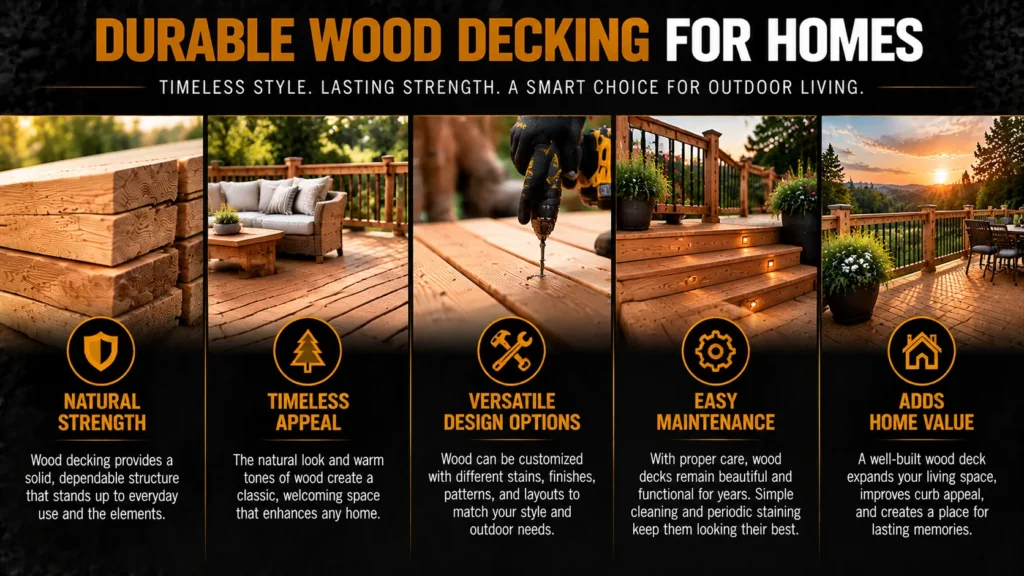
A pressure-treated deck is more than a collection of boards. Its performance depends on the complete system: suitable footings, correctly sized framing, appropriate treatment levels, drainage, ventilation, board spacing, corrosion-resistant connections, safe stairs and guards, and a maintenance plan. A local deck professional can bring those decisions together for a new deck, replacement, extension, or targeted repair.
Schedule a Call With Our Partnership Team
What Is Pressure-Treated Wood?
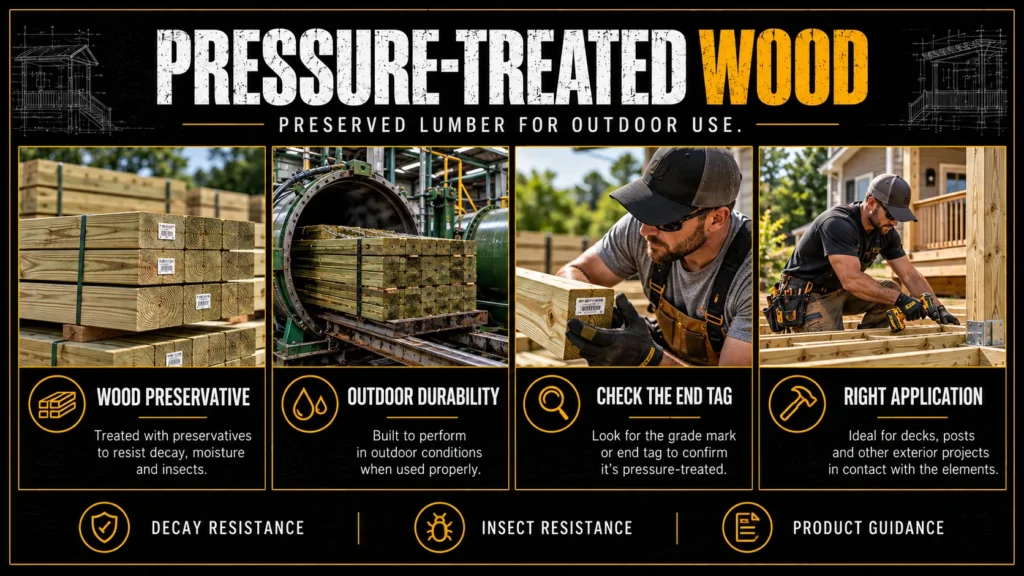
Pressure treatment is a manufacturing process that introduces an approved wood preservative into lumber. The purpose is to improve resistance to fungal decay and wood-destroying insects when the product is used in its intended exposure. The exact preservative, penetration, retention level, species, grade, and permitted application are identified through the product documentation, grade mark, or end tag—not by appearance alone.
Schedule a Call With Our Partnership Team
Above-Ground and Ground-Contact Treatment Ratings
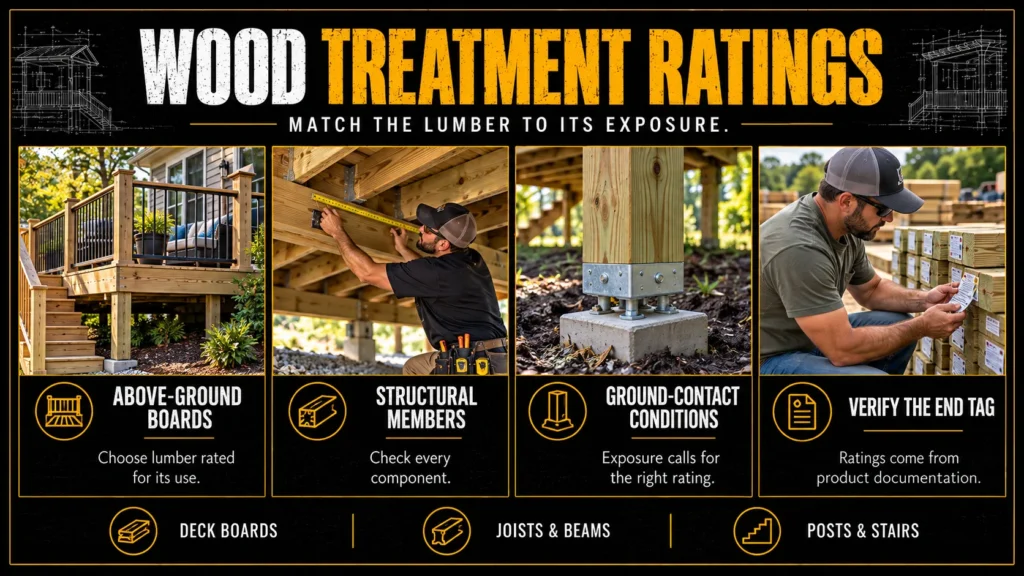
Treated lumber is classified for particular exposure conditions. Deck boards, joists, beams, stair components, posts, and other members do not necessarily share the same exposure or treatment requirement. A component close to soil, difficult to replace, frequently wet, or used in a structurally critical location may need a higher treatment category than a board used in a readily accessible above-ground application.
Schedule a Call With Our Partnership Team
Benefits and Tradeoffs of Pressure-Treated Decking
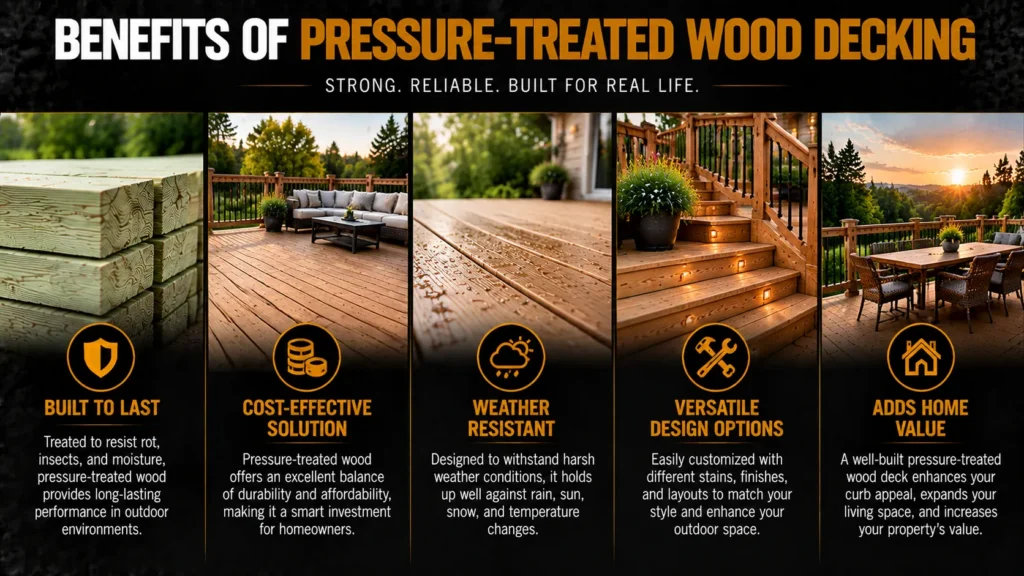
Pressure-treated wood is widely used because it balances accessibility, structural utility, natural appearance, and initial cost. It can support straightforward platforms as well as raised, multilevel, and custom layouts. Depending on local product availability, it may be used for framing, surface boards, stairs, landings, rail components, borders, privacy features, and related outdoor construction.
Schedule a Call With Our Partnership Team
Pressure-Treated Wood Deck Design Options
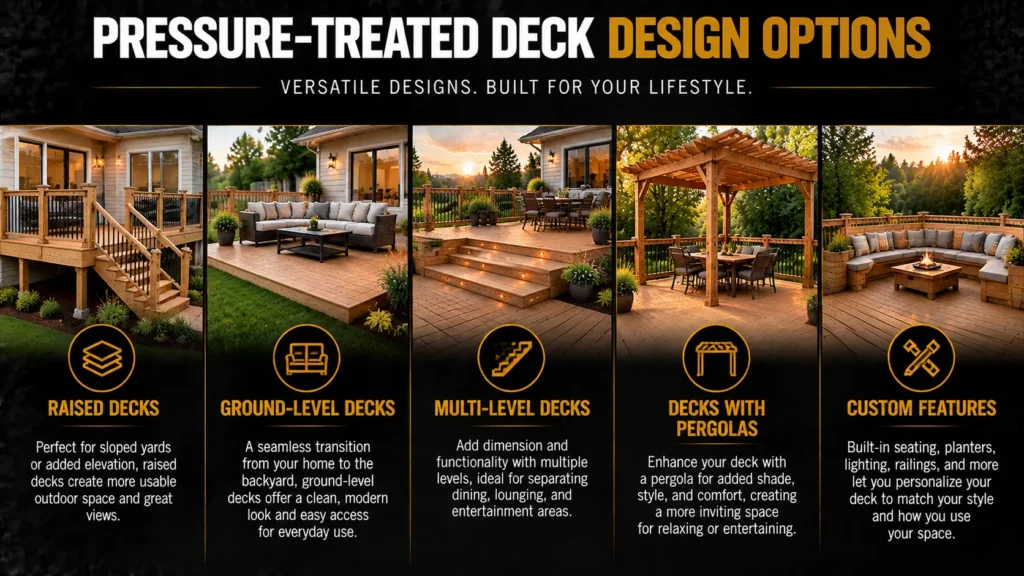
Pressure-treated lumber can support many outdoor-living plans, from a simple ground-level platform to an elevated deck with stairs and guardrails. Design choices may include straight or angled board layouts, picture-frame borders, built-in seating, privacy screens, skirting, multiple levels, widened stairs, and transitions to patios or walkways. Every feature must be coordinated with framing, drainage, fastening, guard requirements, and the condition of the site.
Schedule a Call With Our Partnership Team
Pressure-Treated Wood Deck Services
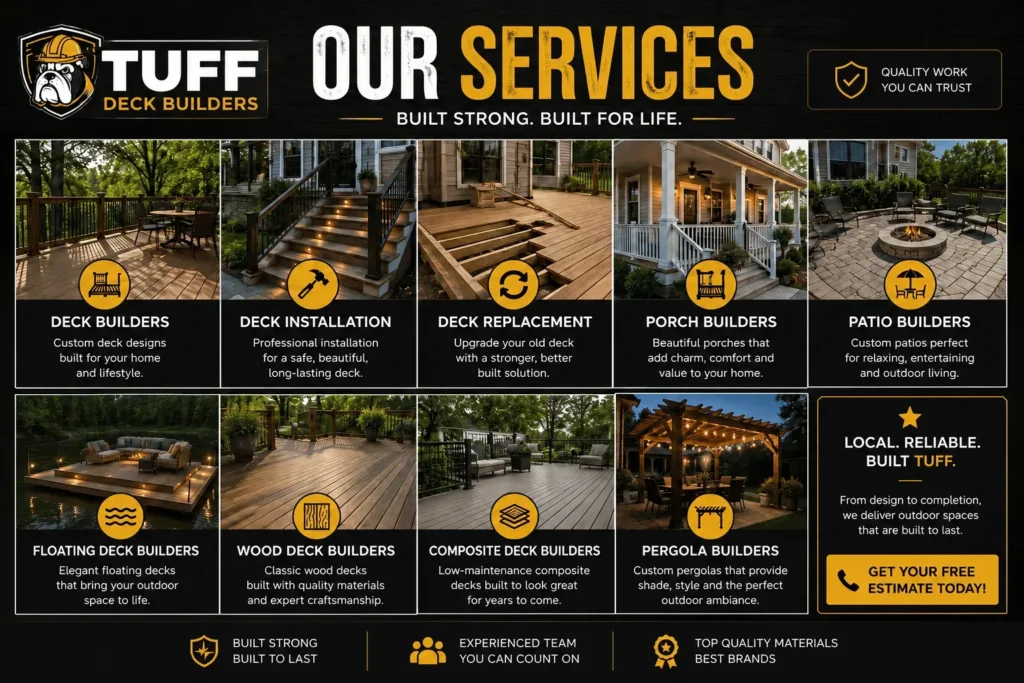
Local TUFF branches and contractor partners may offer pressure-treated wood services for new construction and existing decks. The exact scope depends on the provider, property, code requirements, and the condition of any existing structure. A site evaluation is especially important for replacement and resurfacing work because visible surface wear does not reveal the full condition of joists, beams, posts, footings, ledger connections, or hardware.
Schedule a Call With Our Partnership Team
Our Pressure-Treated Wood Deck Installation Process
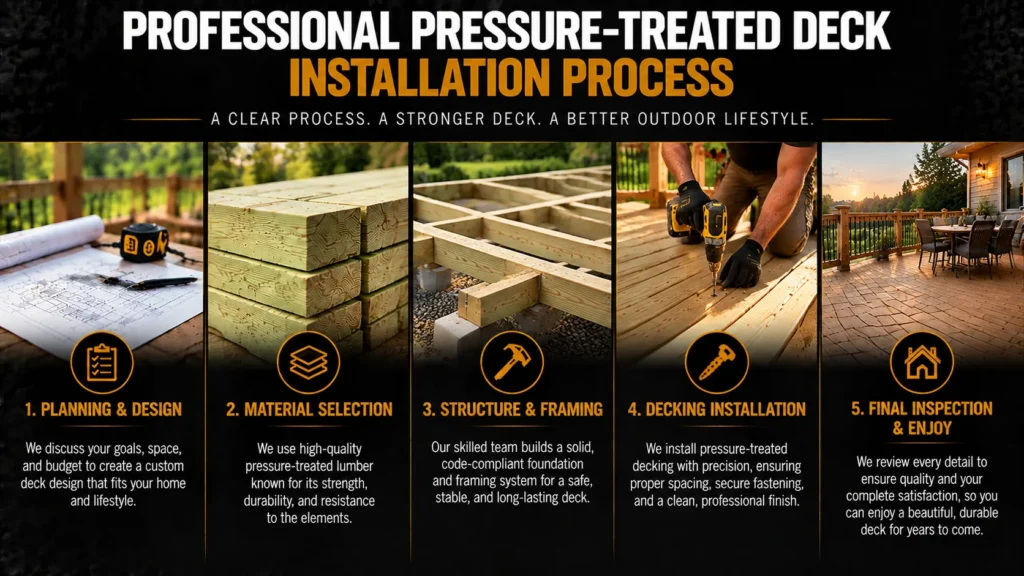
The process begins with the homeowner’s goals and a local property review. The provider evaluates access, grade, drainage, attachment conditions, existing structures, approximate dimensions, stairs, utilities, and other site factors. The resulting scope should identify major design decisions and clarify which party will handle drawings, permitting, demolition, disposal, material delivery, finishing, and inspections.
Schedule a Call With Our Partnership Team
Start Planning Your Pressure-Treated Wood Deck
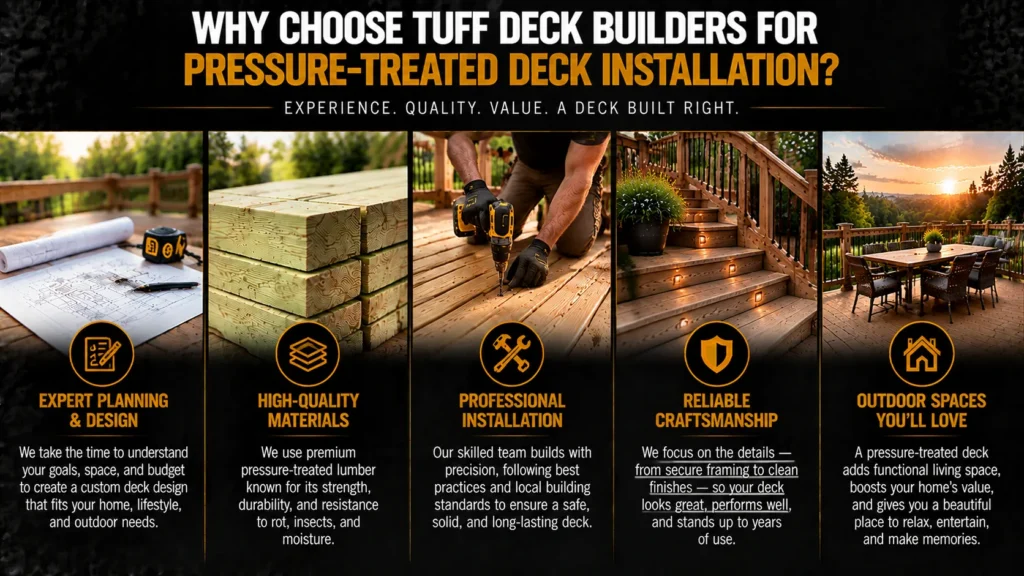
Begin with the way you expect to use the space: everyday seating, dining, grilling, entertaining, access to the yard, or a transition around a door, pool, or landscape feature. Then consider maintenance expectations, preferred color, stair and railing needs, privacy, sun exposure, drainage, and a realistic project budget. Photos, rough measurements, and examples of preferred designs can make the first conversation more productive.
Schedule a Call With Our Partnership Team